
Can You Swim With a New Piercing? A Waikiki Piercer's Guide
At Black Palette Tattoo & Piercing, this is the question we hear most at the piercing counter, usually from someone holding a beach bag. The short answer is no. You shouldn't swim in the ocean, a pool or a hot tub until your piercing has healed, and depending on the placement, that can take anywhere from 6 weeks to a year.
That's a hard rule to hear when the beach is a five-minute walk from our studio. So here's why the wait matters, how long it really is for each type of piercing, and how to plan a Hawaii trip so you can have the piercing and the beach days.
Why You Shouldn't Swim With a Fresh Piercing
A new piercing is an open wound with jewelry in it. For the first several weeks, your body is building a tunnel of new skin around the jewelry. Anything that gets into that channel can slow healing down or lead to an infection.
The ocean
It's easy to assume salt water helps, since we tell you to clean your piercing with saline. But ocean water isn't sterile. It carries bacteria, sand and sunscreen, and a beach like Waikiki sees crowds of swimmers every day. Sand alone can scratch healing tissue and get stuck around the jewelry. After heavy rain, the state also posts brown water advisories when runoff reaches the shoreline.
Pools and hot tubs
Chlorine kills a lot of germs, but not all of them, and it dries out and irritates healing skin. Hot tubs are the riskiest of all. Warm, shared water is an easy place for bacteria to grow, and a long soak is exactly what a new piercing doesn't need.
Streams, waterfalls and ponds
Fresh water has its own risks in Hawaii. The state health department warns that streams and ponds can carry leptospirosis, a bacterial infection that enters the body through cuts and open wounds. A new piercing counts, so save the waterfall swim for after you've healed.
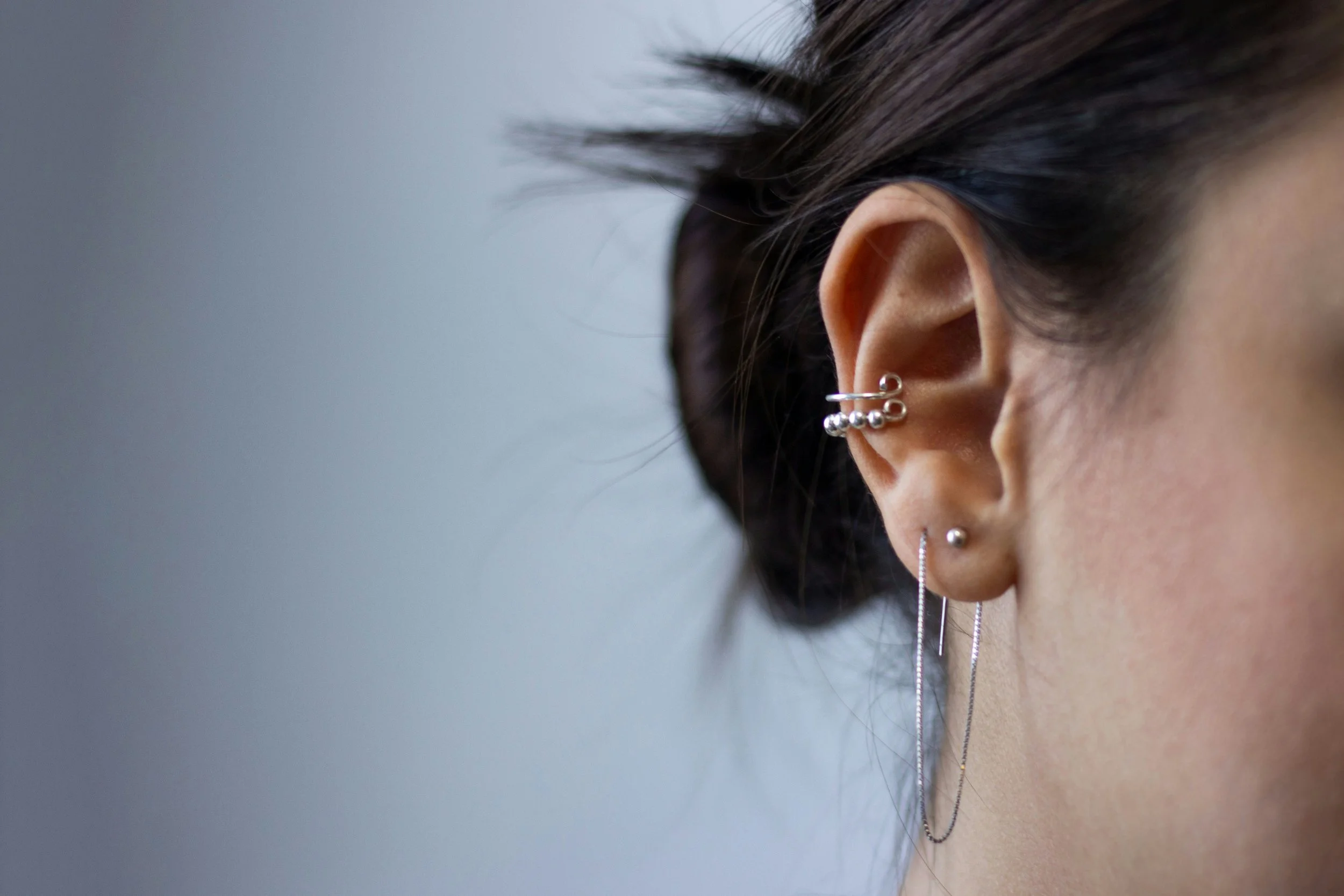
How Long to Wait Before Swimming, by Piercing
Treat these as the minimum. They're the healing times we give clients at the studio, and some people take longer. A piercing can look fine on the outside well before the inside has finished healing.
Earlobe: 8 to 12 weeks. The fastest heal of the common piercings.
Helix, conch or tragus: 6 to 12 months. Cartilage heals slowly, so plan for a long dry stretch.
Daith, rook or industrial: 8 to 12 months. The slowest ear piercings to heal.
Nostril: 6 to 12 months. It sits right where waves and splashes land.
Septum: 6 to 10 weeks. It heals quickly, but snorkel masks press on it.
Eyebrow: 8 to 12 weeks. Sweat and sunscreen run into it easily.
Lip or labret: 6 to 10 weeks. Avoid getting pool or ocean water in your mouth.
Tongue: 4 to 8 weeks. The quickest oral piercing to heal.
Belly button: 6 to 12 months. Swimsuit waistbands rub on it, which slows healing too.
Not sure if yours is healed? You're getting close when there's no tenderness, no crusting and no discharge, and the skin around the jewelry looks like the rest of your skin. Lobes are a good example of how deceptive this can be, which we cover in our guide on how long ear piercings take to heal. When in doubt, stop by and let your piercer take a look.
What Counts as Swimming?
The rule is about soaking your piercing, not about getting it a little wet.
Showers are fine. Let clean water run over the piercing, rinse off any shampoo or soap, and pat it dry with a clean paper towel.
Wading is risky. If water can splash your piercing, assume it will. Waikiki's small waves catch people off guard all the time.
Anything that puts it underwater is out. That includes swimming, snorkeling, surfing, boogie boarding and baths.
Waterproof bandages aren't a workaround. They lift at the edges once you're moving in the water, and then they trap salt water or chlorine right against the piercing.
Visiting Hawaii? Plan Your Piercing Around Your Trip
Many of our piercing clients are on vacation, so we help people plan around this every day. A few approaches work well:
Get pierced near the end of your trip. Enjoy your beach days first, then get pierced a day or two before you fly home and heal there.
Pick a faster-healing piercing if you'll be back in the water soon. Lobes, septum and tongue piercings heal in weeks rather than months.
Save cartilage and belly button piercings for the right time. These can take up to a year, so they make the most sense when you have a long stretch out of the water.
Live here? Plan around your water time. If you paddle, surf or dive often, pick a season when you can stay dry for the full healing time.
Not sure which piercing fits your schedule? Mention your plans when you request an appointment and we'll help you choose.
What to Do If Your New Piercing Gets Wet
It happens. A wave catches you, or someone cannonballs into the hotel pool next to you. Don't panic, and don't take the jewelry out.
Get out of the water and rinse the piercing with clean tap or bottled water.
Clean it with sterile saline spray or your usual saline soak.
Pat it dry with a clean paper towel. Cloth towels can hold bacteria.
Leave it alone and keep an eye on it for the next few days.
Taking the jewelry out can let the hole close over an infection and trap it inside, so leave it in. Our piercing aftercare guide walks through daily care in more detail.
Signs Your Piercing Needs Attention
Some redness, swelling and clear or whitish crust are normal in the first few weeks. These are not:
Thick yellow or green discharge
Redness or warmth that spreads or gets worse after a few days
Throbbing pain that keeps building
Fever, or red streaks spreading from the piercing
If you notice any of these, see a doctor. You're also welcome to stop by the studio so one of our piercers can take a look.
Frequently Asked Questions
Can I swim with a new piercing if I cover it?
We don't recommend it. Waterproof bandages and liquid bandages rarely stay sealed in moving water, and once water gets underneath, it sits against the piercing longer than it would uncovered.
Is ocean water good for a new piercing because it's salty?
No. The saline we recommend is sterile and mixed at a gentle strength. Ocean water has the salt but also bacteria, sand and whatever else is in the water that day.
Can I go in a hot tub with a new piercing?
No. Hot tubs are the riskiest place to take a fresh piercing because warm, shared water lets bacteria grow quickly. Wait until you're fully healed.
How long after an ear piercing can I swim?
Wait at least 8 to 12 weeks for earlobes and 6 to 12 months for cartilage piercings like the helix, conch or tragus. Daith, rook and industrial piercings can take 8 to 12 months.
Can I get pierced the day before a snorkel tour?
We'd book the piercing for after the tour instead. Snorkeling puts your piercing underwater for hours, and masks and straps press on ear, nose and septum piercings.
Get Pierced in Waikiki
Our studio is on the 3rd floor of Waikiki Shopping Plaza, a short walk from most Waikiki hotels. We use only ASTM F-136 implant-grade titanium or solid gold, and your piercer will go over aftercare with you before you leave, including when it's safe to get back in the water.
See our body piercing in Waikiki page for services and jewelry, or request an appointment to book. Walk-ins are welcome when a piercer is free; call or text (808) 649-2627 to check.
